Supply Lines
The word narcissism has flattened. Social media has turned it into a label people throw at difficult (ex)partners, overbearing colleagues and at anyone whose selfishness becomes inconvenient. Used like this, it means very little. Used clinically it describes a specific architecture of the self. One that has consequences for everyone living inside its reach.
But before I continue, something needs to be said about how rare that architecture actually is.
Narcissistic Personality Disorder (NPD) is a diagnosis in the DSM-5. It requires a pervasive pattern of grandiosity, need for admiration and lack of empathy, beginning in early adulthood and present across different contexts. The DSM lists nine diagnostic criteria; at least five of those must be met. Studies estimate between 1 and 6% of the population would meet the criteria. The real figure is probably closer to 1%. So as you can see, that influencer calling their ex a narcissist on social media is almost certainly not describing someone who would meet these criteria.
The ICD-11, as I wrote in Names on Paper has gone further. It abolished all categorical personality disorder diagnoses, NPD included, and replaced them with a dimensional model assessing severity and trait domains. NPD as a discrete category no longer exists in the international classification.
This matters because the gap between clinical narcissism and popular narcissism is huge. Self-regard, a need for recognition, difficulty accepting criticism; these are human, not pathological. What distinguishes narcissistic personality organization, in Kernberg's framework, is the structural dependence on external sources to regulate an internal world that cannot regulate itself. That is not your partner who was selfish about your vacation but a fundamentally different architecture of the self.
When I use the word narcissistic in this piece, I am using it in the clinical sense. As a description of a specific internal structure that produces specific, predictable consequences for the people closest to it. Particularly children, who have no choice about their proximity.
This piece is about one of those consequences: what happens when someone who depends on you for psychological fuel discovers you have stopped providing it.
Narcissistic supply is a term from psychoanalytic theory. It refers to the attention, positive or negative, that a person with narcissistic pathology requires to maintain their internal equilibrium. The concept originates with Otto Fenichel in 1938, but it was Otto Kernberg who gave it its clinical teeth. In his work on borderline and narcissistic personality organization, Kernberg described how the narcissistic personality structure depends on external sources of admiration, compliance, and control to regulate an internal world that cannot regulate itself.
The word supply is precise. It describes a dependency. When the supply flows, the system is stable. When it is interrupted, the system destabilizes. And when it is withdrawn deliberately, by someone who was previously a reliable source, the response is not disappointment or sadness. It is rage.
Kernberg called this narcissistic rage. Ordinary anger responds to a perceived wrong and can be proportional to the cause. Narcissistic rage responds to a perceived threat to the self and is always disproportionate because what is at stake is not a disagreement but the structural integrity of the personality. The boundary you set was small, the response was enormous, the disproportion is the signature.
In adult relationships this dynamic is damaging. In the parent-child relationship it is devastating, because the child begins as supply before they begin as anything else.
Alice Miller described this architecture in The Drama of the Gifted Child. The narcissistic parent does not experience the child as a separate person with separate needs, perceptions, and rights. The child is experienced as an extension; a part of the parent's self that exists to serve the parent's emotional equilibrium. When the child complies, reflects the parent favorably and performs the role assigned to them, the system works. The parent is stable. The child is loved, or something that looks enough like love to pass.
When the child sets a boundary, makes an independent choice or exists on their own terms, the parent does not experience disagreement. They experience amputation. A part of themselves has detached and is moving independently. This is what Miller meant when she described the child's self-differentiation as intolerable to the narcissistic parent. It is not the content of the refusal that matters but the act of being separate. Of having your own judgment. Of asserting autonomy over your own life.
That assertion, in a healthy family system, is unremarkable. In a narcissistic one, it is a declaration of war.
What follows the withdrawal of supply is predictable. Not because narcissistic parents are all the same, but because the architecture produces a limited number of responses, and they tend to arrive in sequence.
Rage comes first. Direct, explosive, disproportionate. The disproportion is the diagnostic marker. A minimal boundary produces a response that would be appropriate to a catastrophic betrayal. The rage is use to try to restore the supply by overwhelming you into compliance. If the intensity is high enough, the reasoning goes and the child will retract. Apologize. Resume the role.
When rage fails, triangulation begins. The narcissistic parent recruits others to reinforce the narrative that the child is the problem. The recruitment is never presented as recruitment. It is presented as concern, or as bewilderment. The third party becomes a channel through which the parent's version of events reaches the child and the child's response flows back. The parent does not need to be in the room. They manage the narrative from a distance, which allows them to control what is said while maintaining the position of the one who suffers.
When triangulation fails to produce compliance, escalation begins. The punishments become structural. Financial withdrawal. Exclusion from the family narrative. Conditional offers framed as ultimatums. And in the most extreme cases, the weaponization of the child's own history, their vulnerabilities, their pain, their darkest moments, repackaged as a prediction of their collapse.
This final move deserves its own examination, because it involves a mechanism Melanie Klein identified decades before the term narcissistic abuse entered popular language.
Klein called it projective identification. In its simplest form, it describes the process by which one person places their own disowned feelings into another person and then reacts to those feelings as if they originate there.
In the context of a narcissistic parent whose child has withdrawn supply, it works like this: the parent cannot hold their own destructive impulse — the rage, the desire to punish, the wish to annihilate the boundary. These feelings are intolerable because they conflict with the parent's self-image as loving, concerned, long-suffering. So the parent deposits the destruction into the child and then points at it with alarm. Look. Look what they're going to do to themselves.
The aggressor becomes the mourner. The person who caused the wound becomes the one predicting you will bleed out from it. And the prediction itself functions as a curse designed to destabilize. To plant the doubt and make you wonder, even for a moment: are they right about me?
I call this narcissistic inversion. It is not a clinical term. It how I tried to come up with a description of what it feels like from the receiving end. The entire relational structure inverts. Your boundary becomes your aggression. Your self-preservation becomes your selfishness. Your survival becomes, in their telling, your destruction. And they are left standing in the centre of the wreckage they created, wearing the face of a parent who tried everything.
There is a reason I chose to write about it here. The clinical language was necessary for me because without it, the experience has no handles. You cannot examine something you cannot name. But of course finding the right words is not the point. The point is what it does to a person to grow up inside this system. To be supply before you are a child. To learn that love is conditional on compliance. To discover, as an adult, that setting a single boundary produces a response so disproportionate that it confirms everything you feared about what would happen if you ever said no.
Understanding the mechanism does not neutralize it. You can map the triangulation, trace the supply chain, identify the projective identification with precision and still sit in silence afterwards, feeling nothing, which is its own kind of evidence. The knowing helps. It gives you coordinates. But coordinates are not the same as solid ground.
What the clinical framework offered me is this: confirmation that the disproportion is not my imagination. That the sequence is documented, studied, and structurally predictable. That my boundaries are not the cause of what followed. It was the trigger. The system was already there, waiting for the moment you stopped providing fuel.
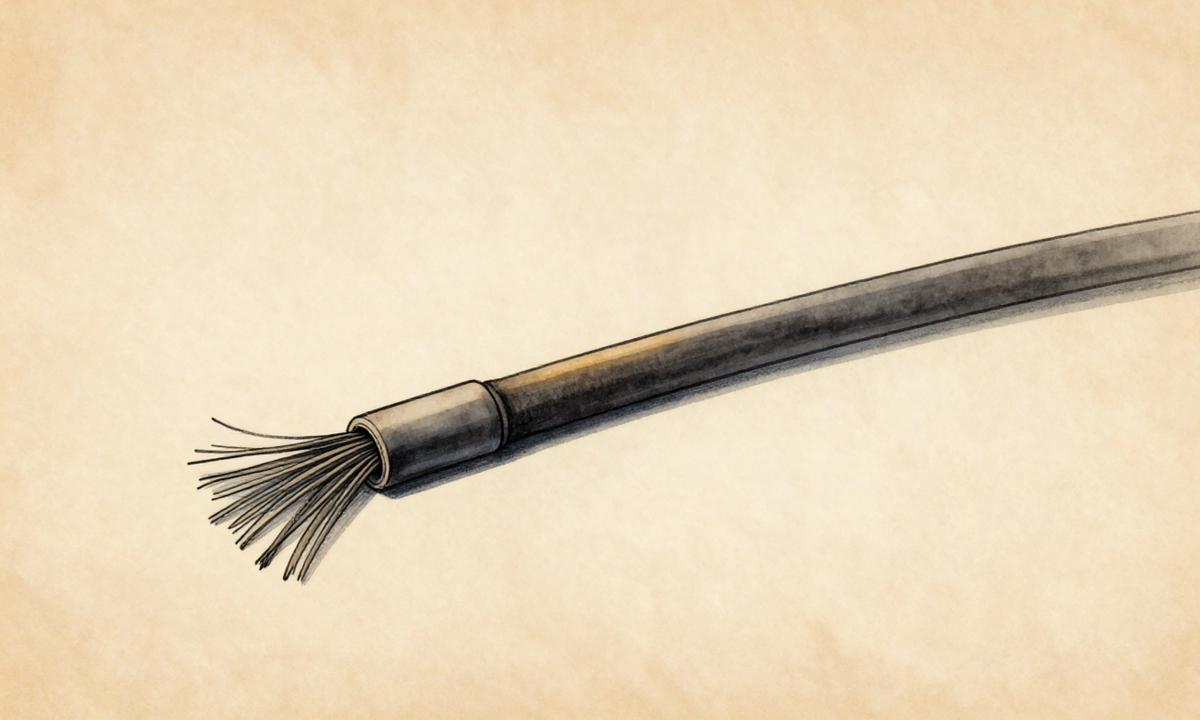
The supply lines were cut. What followed was never about what I did but about what they could no longer take.
Kernberg, O.F. (1975). Borderline Conditions and Pathological Narcissism. Jason Aronson.
Kernberg, O.F. (1984). Severe Personality Disorders: Psychotherapeutic Strategies. Yale University Press.
Klein, M. (1946). 'Notes on Some Schizoid Mechanisms.' International Journal of Psycho-Analysis, 27, 99–110.
Miller, A. (1979). Das Drama des begabten Kindes. Suhrkamp. (English: The Drama of the Gifted Child, Basic Books, 1981.)
American Psychiatric Association. (2013). Diagnostic and Statistical Manual of Mental Disorders (5th ed.).
World Health Organisation. (2019/2022). ICD-11: Personality disorders — dimensional model replacing categorical diagnoses.